Samedi 9 février les élèves de cette section ont à nouveau dévoilé leurs talents de pâtissiers et ont vendu leurs réalisations aux habitants de Sanary. L'argent récolté les aidera à financer en partie leur voyage scolaire à Londres du 9 au 12 avril 2013.
WELCOME on the "La Guicharde Euro 3" blog !!! Year 1 : 2012-2013 Troisième Européenne Découvrez les articles et vidéos de la 3ème européenne de La Guicharde! Ce modeste blog a pour but de présenter les thèmes étudiés,des articles,photos et vidéos réalisés par les élèves de la section "euro" dans le cadre des 2 heures hebdomadaires en section européenne anglais. Enjoy !!! Mrs Morel (English teacher)
dimanche 10 février 2013
Voyage Londres
2ème vente de gâteaux pour la classe de 3ème Euro !
Samedi 9 février les élèves de cette section ont à nouveau dévoilé leurs talents de pâtissiers et ont vendu leurs réalisations aux habitants de Sanary. L'argent récolté les aidera à financer en partie leur voyage scolaire à Londres du 9 au 12 avril 2013.
lundi 4 février 2013
samedi 19 janvier 2013
THE CIVIL WAR (1861 - 1865)
Test your knowledge about the Civil War:
http://www.quibblo.com/quiz/7MmZxgW/Abraham-Lincoln-quizhttp://www.funtrivia.com/trivia-quiz/World/Abe-Lincoln-9986.html
Fought 1861-1865, the American Civil War was the result of decades of sectional tensions between the North and South. Focused on slavery and states rights, these issues came to a head following the election of Abraham Lincoln in 1860.
Over the next several months eleven southern states seceded and formed the Confederate States of America.
On April 14 1865, five days after Lee's surrender, President Lincoln was assassinated while attending a play at Ford's Theater in Washington. The assassin, John Wilkes Booth, was killed by Union troops on April 26 while fleeing south. Lincoln's death cast a pall across the nation and elevated Vice President Andrew Johnson to the presidency.
With the end of fighting a period known as Reconstruction began, with Union troops occupying Southern states and overseeing their gradual reintegration into the Union. Following the war, three amendments were added to the Constitution:
- 13th: Abolished slavery
- 14th: Extension of legal protection regardless of race
- 15th: Abolished all racial restrictions on voting
During the war, Union forces suffered approximately 360,000 killed (140,000 in battle) and 282,000 wounded. Confederates armies lost approximately 258,000 killed (94,000 in battle) and an unknown number of wounded. The total killed in the war exceeds the total deaths from all other US wars combined.
Abraham Lincoln
dimanche 13 janvier 2013
SLAVERY
Test your knowledge:do the following quiz
http://www.historyonthenet.com/Slave_Trade/olaudahequianoquickquiz.htm
Black Peoples of America - Olaudah Equiano
The autobiography of Olaudah Equiano provides us with a detailed insight into the experience of a captured slave.
The
following account was adapted from Equiano's The Interesting Narrative
of Olaudah Equiano or Gustavus Vassa the African by H. Wheeler. 04/10/00
Capture
Olaudah
Equiano was born in 1745 in the African country that is now Nigeria.
The adults worked in the fields during the day leaving the children to
fend for themselves in the village. Older children were often given the
task of acting as lookouts and if they saw any traders approaching the
village they would let out a loud cry. 'AIEEEEEEEYAH!'
Olaudah
and his sister were in the hut when they heard the cry. Looking out of
the door, Olaudah saw the traders hurrying into the village and knew
that there was no time for them to reach the safety of the trees. He and
his sister crouched in the corner of the hut and held their breath.
Their hearts were pounding and their ears were strained for the sound of
approaching footsteps that surely enough came their way. Both Olaudah
and his sister were roughly seized and their mouths were stopped with
dirty cloths to stop them from crying out. Sacks were placed over their
heads and they were carried away from the village. After a while they
were put down on the ground and their hands were tied behind their
backs. The sacks were replaced over their heads and again they were
carried until nightfall.
Although
they were offered food that first night the children were unable to
eat. They felt too sick from fear, the dirty rags that had been in their
mouths and the confinement of the sacking over their heads.
After
a few days they reached a larger African settlement and here Olaudah
and his sister were separated and sold to different families. During the
seven months that Olaudah spent in slavery in Africa he was mostly
treated kindly, in some cases as part of the family, and was given
fairly simple household tasks to do. In Africa slaves were respected and
their status as part of the family was valued. Olaudah was soon to
discover that slavery in America was very different.
The Crossing - Middle Passage
Eventually
he was sold to another trader. Olaudah was marched many miles and saw
the landscape change. He was soon shocked to see that the land had
changed to the colour of the sky and appeared to be moving up and down.
Olaudah was very frightened and had to be dragged nearer to the sea. He
then noticed a very big 'house' on the moving land. The people around
the big 'house' looked very strange. They had long hair, white skin and
spoke a strange language. Olaudah thought that they were devils.
Because
of his youth Olaudah was not chained like the men and women but he was
dragged aboard the ship. There he saw a large copper pot above a furnace
and fearing that he was going to be boiled alive and eaten by the white
men, he fainted on the deck. When he came round black men were standing
over him and he was reassured that he was not going to be eaten. As
Olaudah looked back towards the shore he saw that he was moving away
from the shoreline and realised that he would never see his homeland
again.
Suddenly
all the slaves were forced below deck. The hold was overcrowded, each
man only had about eighteen inches space in which to sit. Everywhere
people were sweating, vomiting, urinating and defecating from fear and
the movement of the ship. The smell was overpowering and many fainted or
died from the stale air. There were tubs at one end of the hold, which
served as toilets but they were rarely emptied and often small children
would fall in and drown. Olaudah was so ill from the smell and the
conditions in the hold that he was allowed to sit on deck during the day
to breathe fresh air. All he wanted to do though was to die. He was
unable to jump overboard because of the nets on the sides of the boat so
he refused to eat. He was beaten for not eating and not wishing to be
punished again he began to eat some food.
The Indies

Eventually
the ship reached the West Indies and although many slaves had died on
the crossing many remained alive. Merchants and plantation owners came
aboard the ship to look at the slaves and Olaudah was made to jump up
and down and stick his tongue out by one of the men. Slaves were poked
and prodded all over their bodies by potential owners who wanted to be
sure that they got the healthiest slaves.
The
next day the slaves were taken ashore and Olaudah was amazed to see
that the houses were made out of bricks. He was even more amazed to see
people riding horses and this served to enhance his belief that the
white peoples were devils.
All
the slaves were put into a pen like a sheep pen. Suddenly there was a
beat of a drum and merchants and plantation owners rushed up to the pen
to choose the slave that they wanted. Because he was so sickly Olaudah
was one of the last to be chosen. He was taken to a big house and was
deposited in the kitchen. Here the sight of the Negro Cook who had a
huge wire frame fitted around her mouth shocked him. He was later to
learn that the mask was a punishment for too much talking.
Olaudah
was not strong enough to work in the fields and so was given the task
of sitting with the grandfather of the house who was dying. All day long
he had to sit on a hard wooden chair ready in case the old man wanted
anything. He also had to help feed him.
His
day was very boring, sat in the deathly quiet room with only the
ticking of the clock for company tick-tock-tick-tock-tick- tock
punctuated by the groaning and moaning of the old man as he fought to
draw breath. Meal times broke the monotony but turned Olaudah's stomach
as he spoon-fed soup to the old man who dribbled and coughed and
spluttered all over him.
The Merchant and Freedom
When
the old man died Olaudah was sold to a sea Captain who allowed the
sailors on board the ship to teach him to read and to write. Although he
was very well treated by the merchant, Olaudah longed to be free and to
return to his homeland. He began buying fruit before sailing and
selling it on to the sailors for a small profit. Eventually he saved
enough to buy his freedom.
As
a free man, he settled in England. He met Granville Sharp and the other
members of the Society for the Abolition of Slavery. He made public
speeches, giving a first-hand account of the treatment of slaves during
capture, sea passage and slavery. Slavery was abolished in Britain in
1807 and throughout the Empire in 1833. Olaudah eventually travelled
back to Nigeria to find his homeland, but sadly there was no trace of
his village or his family.
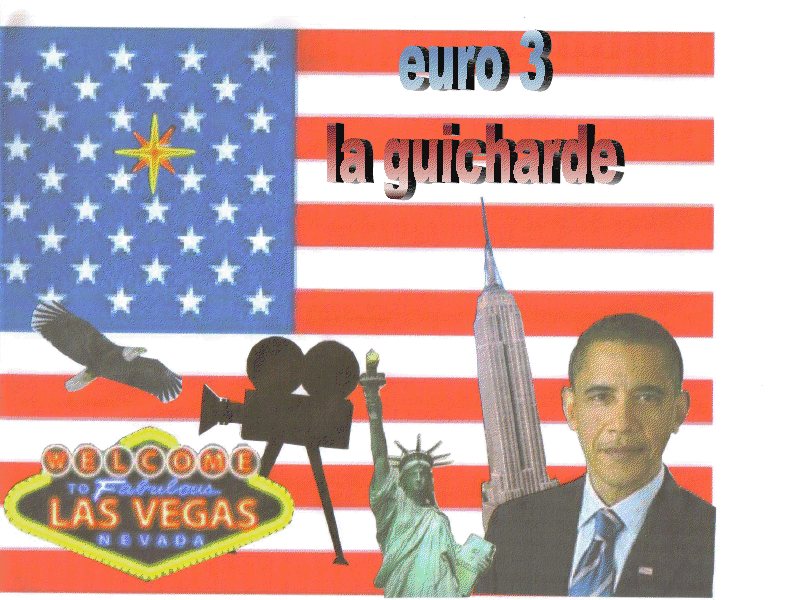
THE AMERICAN WAR OF INDEPENDENCE
The American Revolutionary War "(1775–1783) or American War of Independence began as a war between the Kingdom of Great Britain and thirteen British colonies in North America, and concluded in a global war between several European great powers.
The war was the culmination of the political American Revolution, whereby many of the colonists rejected the legitimacy of the Parliament of Great Britain to govern them without representation, claiming that this violated the Rights of Englishmen."
THE AMERICAN CONSTITUTION
What do you remember about the American constitution ? Do the following quiz
1 -http://www.constitutionfacts.com/?page=quiz.cfm
2 http://teacher.scholastic.com/scholasticnews/indepth/constitution_day/activities/quiz/index.asp
Special thanks to Gautier and Loris who have decided to present the 2nd Amendment to the US Constitution:the right to keep and bear arms
The Second Amendment (Amendment II) to the United States Constitution is the part of the United States Bill of Rights that protects the right of the people to keep and bear arms.
It was adopted on December 15, 1791, along with the rest of the Bill of Rights. The Supreme Court of the United States first ruled in 2008 that the Second Amendment protects an individual right to possess and carry firearms
| Ideals that helped to inspire the Second Amendment in part are symbolized by the minutemen. |
dimanche 9 décembre 2012
VOYAGE LONDRES
En vue du voyage à Londres et dans le but de récolter des fonds pour financer, en partie, leur voyage qui aura lieu de 9 au 12 avril 2013, les élèves de la section européenne ont montré leur talent de pâtissiers le temps d'une journée .Ils ont vendu leurs réalisations (scones , crumbles , cheese cakes ...) à Sanary. Un stand avait été dressé près du kiosque à musique.Les jeunes vendeurs très motivés ont également déambulé dans les rues à la rencontre des Sanaryens qui leur ont réservé un bel acceuil.
jeudi 22 novembre 2012
THANKSGIVING
Thanksgiving Day is a national holiday celebrated primarily in the United States and Canada. Thanksgiving is celebrated each year on the fourth Thursday of November in the United States and on the second Monday of October in Canada.
US President Barack Obama pardons the National Thanksgiving Turkey,
"named Apple, in a ceremony with daughters Sasha and Malia, together with National Turkey Federation Chairman Yubert Envia, in the Rose Garden of the White House in Washington, DC." - 25 November 2010
(telegraph.co.uk)
On Sept. 6, 1620, they set sail on a ship called the Mayflower, leaving from England and arriving in the New World after 65 days. They settled in a town called Plymouth in what is now Massachusetts. The Pilgrims' first winter was so harsh that fewer than 50 of the group survived the season.
On March 16, 1621, an Abnaki Indian named Samoset entered the Plymouth settlement. He welcomed the Pilgrims in English, and the next day returned with another American Indian named Squanto, who spoke English well. With Squanto's help, the Pilgrims were able to survive in the New World. He taught them how to get sap out of the maple trees, how to avoid plants that were poisonous and how to plant corn and other crops.
The harvest was very successful, due in large part to help from the American Indians. The Pilgrims had enough food for the winter and had learned how to survive in the New World. Plymouth Colony's Governor, William Bradford, decided to throw a celebratory feast and invited the colony's American Indian neighbors to take part. The American Indians brought food as well, and the celebration lasted for three days.
Historians believe that this celebration took place sometime in the fall. And although there are very few clues to reconstruct the feast, some scholars believe that food items, like venison and fish, were the main sources of protein, rather than turkey. It's also thought that the food preparation would have been greatly influenced by American Indian traditions since the Puritans had been instructed by American Indians on how to cultivate and cook items
Many view the first Thanksgiving as an example of the possibility of great respect and cooperation between two different cultures. But others see it as a symbol of the colonists' eventual persecution of the American Indians. Sadly, the friendly spirit of the first Thanksgiving and the 50-year period of peace that followed is one exception in a long history of bloodshed between Native American tribes and European settlers.
In 1970, some American Indians began observing a Day of Mourning on Thanksgiving Day to remember the violence and discrimination suffered by their ancestors. The Day of Mourning is observed by gathering at the top of "Coles Hill," which overlooks Plymouth Rock.
In the next section, we'll look at how Thanksgiving spread throughout the colonies, eventually becoming an official U.S. holiday.
Thanksgiving Traditions
Apart from food, the biggest Thanksgiving traditions are football and parades. In ancient harvest festivals, people usually celebrated with games and sports, so you could argue the football tradition has very deep roots.
The traditional American Thanksgiving football game was usually between the Detroit Lions and the Green Bay Packers, but as football has become more popular, there are now more games on Thanksgiving day.
The tradition of Thanksgiving parades goes back to the early 20th century, when people began to associate Thanksgiving with the beginning of the Christmas shopping season. In order to attract customers, stores like Macy's sponsored elaborate parades like the Macy's Thanksgiving Day Parade.
Watch Macy's Thanksgiving Day Parade 2012 !!:
Some people choose to express their gratitude by giving back to the community. Volunteer activities, such as helping out at a soup kitchen or at a shelter, are popular ways to spend Thanksgiving Day.

Since 1947, the National Turkey Federation has gifted a live Thanksgiving turkey to the White House, along with two butchered turkeys It's not known exactly when United States presidents began pardoning the White House Thanksgiving turkey, but the tradition is thought to be connected to Abraham Lincoln sparing a turkey named "Jack" from becoming the main dish in a holiday meal.
Today, the Annual Turkey Ceremony takes place in advance of Thanksgiving, and the public has the opportunity to name the spared turkey, who lives its remaining days at the Kidwell Farm, a petting zoo in Virginia.
QUIZ
How well do you know about Thanksgiving?Do this quiz:
http://funschool.kaboose.com/fun-blaster/thanksgiving/quiz/index.html
US President Barack Obama pardons the National Thanksgiving Turkey,
"named Apple, in a ceremony with daughters Sasha and Malia, together with National Turkey Federation Chairman Yubert Envia, in the Rose Garden of the White House in Washington, DC." - 25 November 2010
(telegraph.co.uk)
History of Thanksgiving
Modern Thanksgiving has its direct origins in American history. In 1609, a group of Puritans fleeing religious persecution in England moved to Holland. They lived in Holland for a number of years until a group of English investors -- the Merchant Adventurers -- financed a trip for more than 100 passengers to the New World.On Sept. 6, 1620, they set sail on a ship called the Mayflower, leaving from England and arriving in the New World after 65 days. They settled in a town called Plymouth in what is now Massachusetts. The Pilgrims' first winter was so harsh that fewer than 50 of the group survived the season.
On March 16, 1621, an Abnaki Indian named Samoset entered the Plymouth settlement. He welcomed the Pilgrims in English, and the next day returned with another American Indian named Squanto, who spoke English well. With Squanto's help, the Pilgrims were able to survive in the New World. He taught them how to get sap out of the maple trees, how to avoid plants that were poisonous and how to plant corn and other crops.
The harvest was very successful, due in large part to help from the American Indians. The Pilgrims had enough food for the winter and had learned how to survive in the New World. Plymouth Colony's Governor, William Bradford, decided to throw a celebratory feast and invited the colony's American Indian neighbors to take part. The American Indians brought food as well, and the celebration lasted for three days.
Historians believe that this celebration took place sometime in the fall. And although there are very few clues to reconstruct the feast, some scholars believe that food items, like venison and fish, were the main sources of protein, rather than turkey. It's also thought that the food preparation would have been greatly influenced by American Indian traditions since the Puritans had been instructed by American Indians on how to cultivate and cook items
Many view the first Thanksgiving as an example of the possibility of great respect and cooperation between two different cultures. But others see it as a symbol of the colonists' eventual persecution of the American Indians. Sadly, the friendly spirit of the first Thanksgiving and the 50-year period of peace that followed is one exception in a long history of bloodshed between Native American tribes and European settlers.
In 1970, some American Indians began observing a Day of Mourning on Thanksgiving Day to remember the violence and discrimination suffered by their ancestors. The Day of Mourning is observed by gathering at the top of "Coles Hill," which overlooks Plymouth Rock.
In the next section, we'll look at how Thanksgiving spread throughout the colonies, eventually becoming an official U.S. holiday.
Thanksgiving Traditions
Apart from food, the biggest Thanksgiving traditions are football and parades. In ancient harvest festivals, people usually celebrated with games and sports, so you could argue the football tradition has very deep roots.
The traditional American Thanksgiving football game was usually between the Detroit Lions and the Green Bay Packers, but as football has become more popular, there are now more games on Thanksgiving day.
The tradition of Thanksgiving parades goes back to the early 20th century, when people began to associate Thanksgiving with the beginning of the Christmas shopping season. In order to attract customers, stores like Macy's sponsored elaborate parades like the Macy's Thanksgiving Day Parade.
Watch Macy's Thanksgiving Day Parade 2012 !!:
Some people choose to express their gratitude by giving back to the community. Volunteer activities, such as helping out at a soup kitchen or at a shelter, are popular ways to spend Thanksgiving Day.

Since 1947, the National Turkey Federation has gifted a live Thanksgiving turkey to the White House, along with two butchered turkeys It's not known exactly when United States presidents began pardoning the White House Thanksgiving turkey, but the tradition is thought to be connected to Abraham Lincoln sparing a turkey named "Jack" from becoming the main dish in a holiday meal.
Today, the Annual Turkey Ceremony takes place in advance of Thanksgiving, and the public has the opportunity to name the spared turkey, who lives its remaining days at the Kidwell Farm, a petting zoo in Virginia.
QUIZ
How well do you know about Thanksgiving?Do this quiz:
http://funschool.kaboose.com/fun-blaster/thanksgiving/quiz/index.html
samedi 10 novembre 2012
VETERANS' DAY

Veterans Day (Poppy Day - Remembrance Day in the UK) is an annual United States holiday honoring military veterans. It originated in 1919 when U.S. President Woodrow Wilson first proclaimed an Armistice Day.
In 1925 President Calvin Coolidge proclaimed it a national holiday and congress approved it. But it wasn't until a shoe repair store owner in Kansas began campaigning for a day to honour all veterans that the day officially became Veterans Day.
A bill for the holiday was pushed through Congress and President Dwight Eisenhower signed it into law on May 26, 1954.

The United States has been in many major world conflicts in the twentieth and twenty-first centuries.
In 1914 the United States joined Britain, France, and Russia in World War I against the triple alliance of Germany, Italy, and Austria-Hungary. Just over 116,000 casualties (= bléssés)seen by the U.S. Since the Civil War, this was the United States highest number of war-borne casualties.
In 1918, at the eleventh hour, of the eleventh day, of the eleventh month, fighting ceased in World War I. Formerly known as Armistice Day, Veterans Day (November 11) is a day to honour veterans living and dead who have given so much to protect their country.
QUIZ
2 - http://www.proprofs.com/quiz-school/quizshow.php?title=veterans-day-quiz-
QUIZ
mardi 30 octobre 2012
AMERICAN FESTIVITIES : HALLOWEEN
HAPPY HALLOWEEN!!

History of Halloween:
What do you know about Halloween? Here is a little history about it.
Like many other holidays, Halloween has evolved and changed throughout history. Over 2000 years ago people called the Celts lived in what is now Ireland, the UK, and parts of Northern France. November 1 was their New Year's Day. They believed that the night before the New Year (October 31) was a time when the living and the the dead came together.
More than a thousand years ago the Christian church named November 1 All Saints Day (also called All Hallows.) This was a special holy day to honor the saints and other people who died for their religion. The night before All Hallows was called Hallows Eve. Later the name was changed to Halloween.
Like the Celts, the Europeans of that time also believed that the spirits of the dead would visit the earth on Halloween. They worried that evil spirits would cause problems or hurt them. So on that night people would wear costumes that looked like ghosts or other evil creatures. They thought if they dressed like that, the spirits would think they were also dead and not harm them.
The tradition of Halloween was carried to America by the immigrating Europeans. Some of the traditions changed a little though. For example, on Halloween in Europe some people would carry lanterns made from turnips. In America, pumpkins were more common so people began putting candles inside them and using them as lanterns. That is why you see Jack 'o lanterns today.
These days Halloween is not usually considered a religious holiday. It is primarily a fun day for children. Children dress up in costumes like people did a thousand years ago, but instead of worrying about evil spirits, they go from house to house. They knock on doors and say 'trick or treat.' The owner of each house gives candy or something special for each trick or treater.


Vocabulary and games
Revise your vocabulary and play these two games!
http://www.marks-english-school.com/games/halloween.html
QUIZ
http://www.buzzle.com/articles/halloween-quiz-questions-and-answers.html


History of Halloween:
Halloween falls on October 31st each year in North America and other parts of the world.
What do you know about Halloween? Here is a little history about it.
Like many other holidays, Halloween has evolved and changed throughout history. Over 2000 years ago people called the Celts lived in what is now Ireland, the UK, and parts of Northern France. November 1 was their New Year's Day. They believed that the night before the New Year (October 31) was a time when the living and the the dead came together.
More than a thousand years ago the Christian church named November 1 All Saints Day (also called All Hallows.) This was a special holy day to honor the saints and other people who died for their religion. The night before All Hallows was called Hallows Eve. Later the name was changed to Halloween.
Like the Celts, the Europeans of that time also believed that the spirits of the dead would visit the earth on Halloween. They worried that evil spirits would cause problems or hurt them. So on that night people would wear costumes that looked like ghosts or other evil creatures. They thought if they dressed like that, the spirits would think they were also dead and not harm them.
The tradition of Halloween was carried to America by the immigrating Europeans. Some of the traditions changed a little though. For example, on Halloween in Europe some people would carry lanterns made from turnips. In America, pumpkins were more common so people began putting candles inside them and using them as lanterns. That is why you see Jack 'o lanterns today.
These days Halloween is not usually considered a religious holiday. It is primarily a fun day for children. Children dress up in costumes like people did a thousand years ago, but instead of worrying about evil spirits, they go from house to house. They knock on doors and say 'trick or treat.' The owner of each house gives candy or something special for each trick or treater.


Vocabulary and games
Revise your vocabulary and play these two games!
http://www.marks-english-school.com/games/halloween.html
QUIZ
http://www.buzzle.com/articles/halloween-quiz-questions-and-answers.html

Inscription à :
Articles (Atom)