mercredi 12 mars 2014

THE GOLD RUSH


THE GOLD RUSH


Congratulations to Laura for her great oral presentation !!


Nuggets found by gold diggers


To revise your lessons , do the following quiz:


                                                                      TRAILS TO THE WEST ( map)

 http://www.eduplace.com/ss/maps/pdf/trailswest.pdf


C
alifornia – Gold Fever

In the early 1840s, California was a distant outpost that few Americans had seen. John Sutter was a Swiss emigrant who had come to California in 1839 with the idea of building a vast empire. At the end of 1847, Sutter sent a group of men, including James Marshall, to build a new sawmill near the river. The sawmill was nearly complete when, on January 24th 1848, Marshall spotted something shining in the river.

John Sutter
The metal was tested and confirmed as gold. However, Sutter wanted the area to be his empire and did not want to attract others to the area so it was decided to keep the discovery secret. But it was not long before news of the discovery leaked out. The gold rush that followed was to make California the richest state.

James Marshall

Travelling to California

Via South America

Six months of seasickness, rotten food, rancid water and boredom.
Via Panama
The quickest option but travellers risked malaria and cholera.
Overland – The California Trail. A 2000 mile walk in sweltering heat with little food or water.

Get rich quick

The road to poverty

Road to sickness

Sam Brannan was a San Francisco merchant who spread news of the discovery throughout San Francisco. He also bought every pickaxe, shovel and pan in the region. A metal pan that had cost 20 cents was sold for 15 dollars. In nine weeks Brannan made 36,000 dollars.
Many overland travellers were not prepared for the harshness of the journey. Supplies ran out very quickly and replacements were expensive. Sugar rose to $1.50 per pint, coffee $1.00 per pint, alcohol $4.00. Many were forced to pay $1, $5 or even $100 for a glass of water. Those without money died.
The routes west became crowded with wagons. Dust was kicked up by those in front, making it difficult to see and breathe. Wagons camped together overnight and dug toilet pits, often close to rivers resulting in polluted water supplies, diarrhoea, illness and death.

mardi 18 février 2014

A SLAVE'S DIARY

Dans le cadre de la séquence sur l'esclavage les élèves se sont glissés dans la peau d'un esclave et ont écrit l'extrait de leur journal


Laura and Jodie ' diary


Emma, Fanny , India, Mathilde's diary

Alexia, Pauline C ,. Léa S. 's diary


Camille , Clara , Marine, Pauline M.'S diary


mardi 4 février 2014

THE CIVIL WAR (1860 - 1865)

Thanks to Camille B. and Camille H for their oral presentation Abraham Lincoln


Civil War (1860-1865)
Timeline

Conflict over issues of how much control the federal government should have over the states, industrialization, trade, and especially slavery had increased tension between Northern and Southern states. 

After Abraham Lincoln was elected president in 1860, 11 Southern states seceded (or withdrew) from the Union and set up an independent government--the Confederate States of America.
 These events led to the outbreak of the Civil War--a brutal, bloody, four-year conflict that left the South defeated and ended slavery at the cost of more than half a million lives.


November 6, 1860 - Abraham Lincoln, who had declared "Government cannot endure permanently half slave, half free..." is elected president, the first Republican, receiving 180 of 303 possible electoral votes and 40 percent of the popular vote.


December 20, 1860 - South Carolina secedes from the Union. Followed within two months by Mississippi, Florida, Alabama, Georgia, Louisiana and Texas.


Auction and Negro sales, Atlanta, Georgia.


1861
February 9, 1861 - The Confederate States of America is formed with Jefferson Davis, a West Point graduate and former U.S. Army officer, as president.
March 4, 1861 - Abraham Lincoln is sworn in as 16th President of the United States of America.
Fort Sumter Attacked

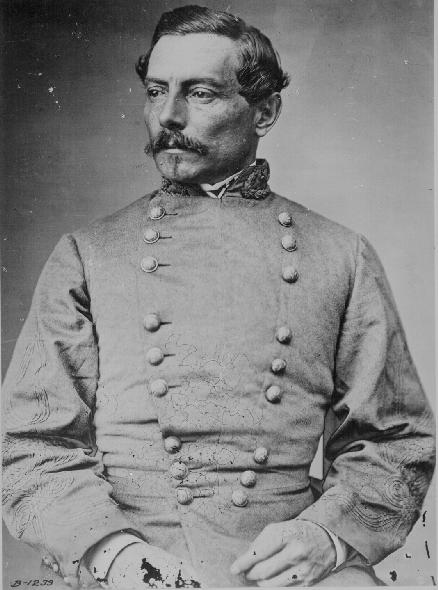
April 12, 1861 - At 4:30 a.m. Confederates under Gen. Pierre Beauregard open fire with 50 cannons upon Fort Sumter in Charleston, South Carolina. The Civil War begins.
Fort Sumter after its capture, showing damage from the Rebel bombardment of over 3000 shells and now flying the Rebel "Stars and Bars" - April 14, 1861.
April 15, 1861 - President Lincoln issues a Proclamation calling for 75,000 militiamen, an

Watch this video explaining the Civil War
http://www.neok12.com/video/American-Civil-War/zX6779726f01017267034359.htm

Check your knowledge : do this quiz  
http://www.softschools.com/quizzes/history/civil_war/quiz195.html