lundi 20 janvier 2014

SLAVERY IN THE USA

                                                         SLAVERY


Test your knowledge:do the following quiz

 http://www.historyonthenet.com/Slave_Trade/olaudahequianoquickquiz.htm


 Black Peoples of America - Olaudah Equiano

 Olaudah Equiano

The autobiography of Olaudah Equiano provides us with a detailed insight into the experience of a captured slave. 
The following account was adapted from Equiano's The Interesting Narrative of Olaudah Equiano or Gustavus Vassa the African by H. Wheeler. 04/10/00
 Capture
Olaudah Equiano was born in 1745 in the African country that is now Nigeria. 
The adults worked in the fields during the day leaving the children to fend for themselves in the village. Older children were often given the task of acting as lookouts and if they saw any traders approaching the village they would let out a loud cry. 'AIEEEEEEEYAH!'
Olaudah and his sister were in the hut when they heard the cry. Looking out of the door, Olaudah saw the traders hurrying into the village and knew that there was no time for them to reach the safety of the trees. He and his sister crouched in the corner of the hut and held their breath. Their hearts were pounding and their ears were strained for the sound of approaching footsteps that surely enough came their way. Both Olaudah and his sister were roughly seized and their mouths were stopped with dirty cloths to stop them from crying out. Sacks were placed over their heads and they were carried away from the village. After a while they were put down on the ground and their hands were tied behind their backs. The sacks were replaced over their heads and again they were carried until nightfall. 
Although they were offered food that first night the children were unable to eat. They felt too sick from fear, the dirty rags that had been in their mouths and the confinement of the sacking over their heads.
After a few days they reached a larger African settlement and here Olaudah and his sister were separated and sold to different families. During the seven months that Olaudah spent in slavery in Africa he was mostly treated kindly, in some cases as part of the family, and was given fairly simple household tasks to do. In Africa slaves were respected and their status as part of the family was valued. Olaudah was soon to discover that slavery in America was very different.

The Crossing - Middle Passage

Eventually he was sold to another trader. Olaudah was marched many miles and saw the landscape change. He was soon shocked to see that the land had changed to the colour of the sky and appeared to be moving up and down. Olaudah was very frightened and had to be dragged nearer to the sea. He then noticed a very big 'house' on the moving land. The people around the big 'house' looked very strange. They had long hair, white skin and spoke a strange language. Olaudah thought that they were devils.
Because of his youth Olaudah was not chained like the men and women but he was dragged aboard the ship. There he saw a large copper pot above a furnace and fearing that he was going to be boiled alive and eaten by the white men, he fainted on the deck. When he came round black men were standing over him and he was reassured that he was not going to be eaten. As Olaudah looked back towards the shore he saw that he was moving away from the shoreline and realised that he would never see his homeland again.
Suddenly all the slaves were forced below deck. The hold was overcrowded, each man only had about eighteen inches space in which to sit. Everywhere people were sweating, vomiting, urinating and defecating from fear and the movement of the ship. The smell was overpowering and many fainted or died from the stale air. There were tubs at one end of the hold, which served as toilets but they were rarely emptied and often small children would fall in and drown. Olaudah was so ill from the smell and the conditions in the hold that he was allowed to sit on deck during the day to breathe fresh air. All he wanted to do though was to die. He was unable to jump overboard because of the nets on the sides of the boat so he refused to eat. He was beaten for not eating and not wishing to be punished again he began to eat some food.
 The Indies
Slaves arrive in the Indies
Eventually the ship reached the West Indies and although many slaves had died on the crossing many remained alive. Merchants and plantation owners came aboard the ship to look at the slaves and Olaudah was made to jump up and down and stick his tongue out by one of the men. Slaves were poked and prodded all over their bodies by potential owners who wanted to be sure that they got the healthiest slaves.
The next day the slaves were taken ashore and Olaudah was amazed to see that the houses were made out of bricks. He was even more amazed to see people riding horses and this served to enhance his belief that the white peoples were devils. 


All the slaves were put into a pen like a sheep pen. Suddenly there was a beat of a drum and merchants and plantation owners rushed up to the pen to choose the slave that they wanted. Because he was so sickly Olaudah was one of the last to be chosen. He was taken to a big house and was deposited in the kitchen. Here the sight of the Negro Cook who had a huge wire frame fitted around her mouth shocked him. He was later to learn that the mask was a punishment for too much talking.
Olaudah was not strong enough to work in the fields and so was given the task of sitting with the grandfather of the house who was dying. All day long he had to sit on a hard wooden chair ready in case the old man wanted anything. He also had to help feed him.
His day was very boring, sat in the deathly quiet room with only the ticking of the clock for company tick-tock-tick-tock-tick- tock punctuated by the groaning and moaning of the old man as he fought to draw breath. Meal times broke the monotony but turned Olaudah's stomach as he spoon-fed soup to the old man who dribbled and coughed and spluttered all over him.

 The Merchant and Freedom
When the old man died Olaudah was sold to a sea Captain who allowed the sailors on board the ship to teach him to read and to write. Although he was very well treated by the merchant, Olaudah longed to be free and to return to his homeland. He began buying fruit before sailing and selling it on to the sailors for a small profit. Eventually he saved enough to buy his freedom.
As a free man, he settled in England. He met Granville Sharp and the other members of the Society for the Abolition of Slavery. He made public speeches, giving a first-hand account of the treatment of slaves during capture, sea passage and slavery. Slavery was abolished in Britain in 1807 and throughout the Empire in 1833. Olaudah eventually travelled back to Nigeria to find his homeland, but sadly there was no trace of his village or his family. 

mercredi 11 décembre 2013

US GOVERNMENT

The first type of government in America was based primarily on state government. Prior to the signing of the Constitution, America had been made up of thirteen colonies, which had been ruled by England. 
Following the Revolutionary War, these colonies, although they had formed a league of friendship under the Articles of Confederation, basically governed themselves. They feared a strong central government like the one they lived with under England's rule.
 However, it was soon discovered that this weak form of state government could not survive and so the Constitution was drafted.

The Constitution :
  • defines and limits the power of the national government,
  • defines the relationship between the national government and individual state governments, and
  • guarantees the rights of the citizens of the United States.

This time, it was decided that a government system based on federalism would be established. In other words, power is shared between the national and state (local) governments. 
The opposite of this system of government is a centralized government, such as in France and Great Britain, where the national government maintains all power. 

Sharing power between the national government and state governments allows  to enjoy the benefits of diversity and unity. For example, the national government may set a uniform currency system. 
Could you imagine having 50 different types of coins, each with a different value? You would need to take along a calculator to go shopping in another state. By setting up a national policy, the system is fair to everyone and the states do not have to bear the heavy burden of regulating their currency. 

On the other hand, issues such as the death penalty have been left up to the individual states. The decision whether or not to have a death penalty, depends on that state's history, needs, and philosophies.
National versus State Government

After the American colonies won their independence from England, the thirteen colonies became thirteen states. The new states formed a league so they could work together. Their system of government was described in a document called the Articles of Confederation. In this system, the state governments had most of the power. The national government was very weak. This was very different from the government under the King.
The Founding Fathers (James Madison, G Washington , ........) saw that this system left the nation too weak. They decided to develop a new system of government. They wrote a new document, the Constitution, to replace the Articles of Confederation. The Constitution made a stronger national government. It divided power between the national government and the state governments. This system is called federalism.

What is Federalism?
Since the signing of the Constitution, the division of power in the United States has been based on sharing power between the national government and individual state governments. This is known as federalism.
Let's take a look at how power is distributed in the United States:

National GovernmentState Government
  • Coin money.
  • Declare war.
  • Conduct foreign relations.
  • Oversee foreign and interstate trade.
  • Ratify amendments.
  • Manage public health and safety.
  • Oversee trade within the state.
  • Education
In addition, the national government and state governments share the following powers:
  • Make and enforce laws.
  • Tax.
  • Borrow money.
In order to carry out these duties, the national government and individual state goverments are divided into areas. Each area is given a duty to perform.

                                                                       THE  3 BRANCHES

Executive Branch

The executive branch of Government makes sure that the laws of the United States are obeyed. The President of the United States is the head of the executive branch of government. This branch is very large so the President gets help from the Vice President, department heads (Cabinet members), and heads of independent agencies.
  • President: Leader of the country and commands the military.
  • Vice President: President of the Senate and becomes President if the President can no longer do the job.
  • Departments: Department heads advise the President on issues and help carry out policies.
  • Independent Agencies: Help carry out policy or provide special services.
                                                        Legislative Branch


The U.S. Congress


The U.S. Congress is made up of two parts, the House of Representatives and the Senate.
 Congress meets at the U.S. Capitol in Washington, D.C. 
Its primary duty is to write, debate, and pass bills, which are then passed on to the President for approval.
Other Powers of Congress
  • Makes laws controlling trade between states and between the
    United States and other countries.
  • Makes laws about taxes and borrowing money.
  • Approves the making of money.
  • Can declare war on other countries.
Judicial Branch

The judicial branch of government is made up of the court system. The Supreme Court is the highest court in the land. 
Article III of the Constitution established this Court and all other Federal courts were created by Congress. Courts decide arguments about the meaning of laws, how they are applied, and whether they break the rules of the Constitution.

The Supreme Court

The Supreme CourtThe Supreme Court is the highest court in the United States. 
The Supreme Court hears cases that have made their way through the court system, but of the more than 7,500 cases that are sent to the Supreme Court each year, only about 80 to 100 cases are actually accepted. Once the Supreme Court makes a decision, it can only be changed by another Supreme Court decision or by amending (changing) the Constitution. This is a very important power that can affect the lives of a lot of people. Also, since the main power of the Supreme Court is to decide cases that challenge the Constitution, the Court must decide if the case they receive really challenges the Constitution.

The Supreme Court is made up of nine Justices. One of these is the Chief Justice. They are appointed by the President and must be approved by the Senate. Justices have their jobs for life, unless they resign, retire, or are impeached by the House and convicted by the Senate (the removal process as described by the Constitution).

jeudi 5 décembre 2013

GOOD NEWS !!!

Un grand merci à Mme Marie-Pierre Lagorce, présidente du Comité local d'entraide, qui est venue remettre ce matin un chèque de 500 euros pour aider au financement du voyage à Londres !

De gauche à droite  Mme Beaufils, principale adjointe, M.Tembouret, principal et Mme Lagorce

mardi 3 décembre 2013

TRIP TO LONDON

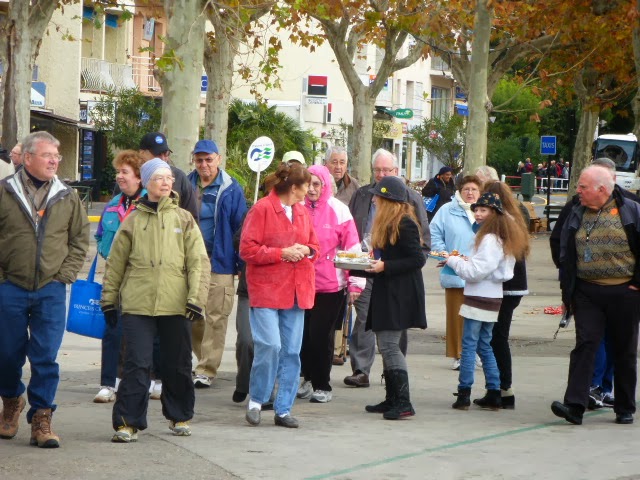
Samedi 30 novembre :les élèves de 3ème de la section européenne ont vendu des gâteaux sur le port de Sanary :la somme récoltée servira à réduire le coût du voyage à Londres qui se déroulera du 15 au 18 avril 2014.


Congratulations to all of you for your involvement ! The sale of cakes was a real success!!


A couple of Americans from Washington DC buying some cakes
What a crowd ! What a success!
Ajouter une légende

mercredi 27 novembre 2013

THANKSGIVING

THANKSGIVING

Turkey
Thanksgiving Day is a national holiday celebrated primarily in the United States and Canada. Thanksgiving is celebrated each year on the fourth Thursday of November in the United States and on the second Monday of October in Canada.


US President Barack Obama pardons the National Thanksgiving Turkey,
"named Apple, in a ceremony with daughters Sasha and Malia, together with National Turkey Federation Chairman Yubert Envia, in the Rose Garden of the White House in Washington, DC." - 25 November 2010

(telegraph.co.uk)

History of Thanksgiving

­Modern Thanksgiving has its direct origins in American history. In 1609, a group of Puritans fleeing religious persecution in England moved to Holland. They ­lived in Holland for a number of years until a group of English investors -- the Merchant Adventurers -- financed a trip for more than 100 passengers to the New World.
­On Sept. 6, 1620, they set sail on a ship called the Mayflower, leaving from England and arriving in the New World after 65 days. They settled in a town called Plymouth in what is now Massachusetts. The Pilgrims' first winter was so harsh that fewer than 50 of the group survived the season.
On March 16, 1621, an Abnaki Indian named Samoset entered the Plymouth settlement. He welcomed the Pilgrims in English, and the next day returned with another American Indian named Squanto, who spoke English well. With Squanto's help, the Pilgrims were able to survive in the New World. He taught them how to get sap out of the maple trees, how to avoid plants that were poisonous and how to plant corn and other crops.
­The harvest was very successful, due in large part to help from the American Indians. The Pilgrims had enough food for the winter and had learned how to survive in the New World. Plymouth Colony's Governor, William Bradford, decided to throw a celebratory feast and invited the colony's American Indian neighbors to take part. The American Indians brought food as well, and the celebration lasted for three days.
Historians believe that this celebration took place sometime in the fall. And although there are very few clues to reconstruct the feast, some scholars believe that food items, like venison and fish, were the main sources of protein, rather than turkey. It's also thought that the food preparation would have been greatly influenced by American Indian traditions since the Puritans had been instructed by American Indians on how to cultivate and cook items 

Many view the first Thanksgiving as an example of the possibility of great respect and cooperation between two different cultures. But others see it as a symbol of the colonists' eventual persecution of the American Indians. Sadly, the friendly spirit of the first Thanksgiving and the 50-year period of peace that followed is one exception in a long history of bloodshed between Native American tribes and European settlers.
In 1970, some American Indians began observing a Day of Mourning on Thanksgiving Day to remember the violence and discrimination suffered by their ancestors. The Day of Mourning is observed by gathering at the top of "Coles Hill," which overlooks Plymouth Rock.
In the next section, we'll look at how Thanksgiving spread throughout the colonies, eventually becoming an official U.S. holiday.
 
Thanksgiving Traditions

Apart from food, the biggest Thanksgiving traditions are football and parades. In an­cient harvest festivals, people usually celebrated with games and sports, so you could argue the football tradition has very deep roots.
 The traditional American Thanksgiving football game was usually between the Detroit Lions and the Green Bay Packers, but as football has become more popular, there are now more games on Thanksgiving day.
­The tradition of Thanksgiving parades goes back to the early 20th century, when people began to associate Thanksgiving with the beginning of the Christmas shopping season. In order to attract customers, stores like Macy's sponsored elaborate parades like the Macy's Thanksgiving Day Parade.

mercredi 13 novembre 2013

NATIVE AMERICANS


How well do you know about Native Americans? Do this quiz
http://www.ducksters.com/history/native_americans_questions.php

 Special thanks to Clara and Pauline for their oral presentation on Sitting Bull and Crazy Horse


                                                         Clara and Pauline 's DIY :a totem pole


Special thanks to Fanny for her oral presentation on Native American and Geronimo

Pocahontas !!!! !


                           Indian reservations and major Indian battles in the 19th century:


                                                                              Indian culture map
    
   Famous Indian chefs
Crazy Horse


Sitting Bull


                                                  Crazy Horse Memorial:


Portrait of Pocahontas
Pocahontas
Born: 1596 (exact date uncertain)
Died: March (exact date uncertain) 1617
Have you seen the animated film "Pocahontas"? It tells the story of the daughter of Powhatan, the most powerful Indian chief of coastal Virginia in the early 1600s. Even today, her story fascinates people.
Pocahontas was the daughter of Powhatan, an important chief of the Algonquian Indians (the Powhatans) who lived in the Virginia region. Her real name was "Matoaka." "Pocahontas" was a nickname meaning "playful" or "mischievous one."
Pocahontas was only about 10 years old when her world changed forever. English settlers arrived from far across the ocean and created a settlement at Jamestown, Virginia. These new English settlers looked and acted very differently from Powhatan's tribe. Some of Pocahontas's people were afraid or even hateful of the newcomers. But the chief's daughter had a curious mind and a friendly manner. She wanted to know more about these newcomers.
Pocahontas is most famous for reportedly saving the life of English Captain John Smith. Throughout her short life (she died at the age of 22), however, she was important in other ways as well. Pocahontas tried to promote peace between the Powhatans and the English colonists. She even converted to Christianity and married John Rolfe, a Jamestown colonist, a union which helped bring the two groups together. Her untimely death in England hurt the chance for continued peace in Virginia between the Algonquians and the colonists.

The Trail of Tears (Piste des Larmes)


It is the name given to the forced relocation and movement of Native American nations from southeastern parts of the United Statesfollowing the Indian Removal Act of 1830. 
The removal included many members of the Cherokee, Muscogee (Creek), Seminole, Chickasaw, and Choctaw nations, among others in the United States, from their homelands to Indian Territory in eastern sections of the present-day state of Oklahoma. The phrase originated from a description of the removal of the ChoctawNation in 1831.
Many Native Americans suffered from exposure, disease and starvation on the route to their destinations. Many died, including 2,000-6,000 of 16,542 relocated Cherokee.
 European Americans and African American freedmen and slaves also participated in the Chickasaw, Choctaw, Muscogee Creek and Seminole forced relocations.


vendredi 18 octobre 2013

AMERICAN HISTORY: colonial times

Colonial America (1492-1763)


Timeline

European nations came to the Americas to increase their wealth and broaden their influence over world affairs.

 The Spanish were among the first Europeans to explore the New World and the first to settle in what is now the United States.

By 1650, however, England had established a dominant presence on the Atlantic coast. 

The first colony was founded at Jamestown, Virginia, in 1607. Many of the people who settled in the New World came to escape religious persecution. The Pilgrims, founders of Plymouth, Massachusetts, arrived in 1620. In both Virginia and Massachusetts, the colonists flourished with some assistance from Native Americans. New World grains such as corn kept the colonists from starving while, in Virginia, tobacco provided a valuable cash crop. 

By the early 1700s enslaved Africans made up a growing percentage of the colonial population. 

By 1770, more than 2 million people lived and worked in Great Britain's 13 North American colonies.

NEW YORK CITY

Special thanks to Emma and Mathilde for their great oral presentation on New York City
Congratulations girls !!


Emma's DIY : the Chrysler Building


Mathilde's DIY : The Empire State Building


The 5 boroughs of NY City