mardi 5 janvier 2016

The Civil War (1860-1865)


                                                   The Civil War (1860-1865)
Timeline


Watch this video explaining the Civil War
http://www.neok12.com/video/American-Civil-War/zX6779726f01017267034359.htm

Conflict over issues of how much control the federal government should have over the states, industrialization, trade, and especially slavery had increased tension between Northern and Southern states. 
After Abraham Lincoln was elected president in 1860, 11 Southern states seceded (or withdrew) from the Union and set up an independent government--the Confederate States of America.
 These events led to the outbreak of the Civil War--a brutal, bloody, four-year conflict that left the South defeated and ended slavery at the cost of more than half a million lives.


November 6, 1860 - Abraham Lincoln, who had declared "Government cannot endure permanently half slave, half free..." is elected president, the first Republican, receiving 180 of 303 possible electoral votes and 40 percent of the popular vote.


December 20, 1860 - South Carolina secedes from the Union. Followed within two months by Mississippi, Florida, Alabama, Georgia, Louisiana and Texas.

Auction and Negro sales, Atlanta, Georgia.


1861
February 9, 1861 - The Confederate States of America is formed with Jefferson Davis, a West Point graduate and former U.S. Army officer, as president.
March 4, 1861 - Abraham Lincoln is sworn in as 16th President of the United States of America.

Fort Sumter Attacked

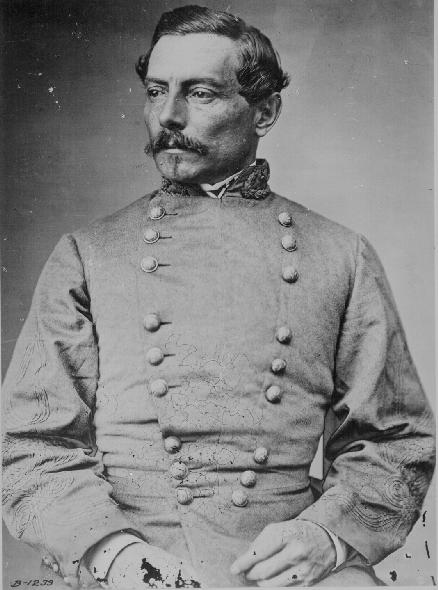
April 12, 1861 - At 4:30 a.m. Confederates under Gen. Pierre Beauregard open fire with 50 cannons upon Fort Sumter in Charleston, South Carolina. The Civil War begins.
Fort Sumter after its capture, showing damage from the Rebel bombardment of over 3000 shells and now flying the Rebel "Stars and Bars" - April 14, 1861.
April 15, 1861 - President Lincoln issues a Proclamation calling for 75,000 militiamen, an

Check your knowledge : do this quiz  
http://www.softschools.com/quizzes/history/civil_war/quiz195.html

NATIVE AMERICANS

                                 NATIVE AMERICANS


Watch this video on the history of the Indians : https://youtu.be/8YR2FgxalCU

How well do you know about Native Americans? Do this quiz
http://www.ducksters.com/history/native_americans_questions.php

           Indian reservations and major Indian battles in the 19th century:


                                                                              Indian culture map
    
   Famous Indian chefs
Crazy Horse


Sitting Bull


                                                  Crazy Horse Memorial:


Portrait of Pocahontas
Pocahontas
Born: 1596 (exact date uncertain)
Died: March (exact date uncertain) 1617
Have you seen the animated film "Pocahontas"? It tells the story of the daughter of Powhatan, the most powerful Indian chief of coastal Virginia in the early 1600s. Even today, her story fascinates people.
Pocahontas was the daughter of Powhatan, an important chief of the Algonquian Indians (the Powhatans) who lived in the Virginia region. Her real name was "Matoaka." "Pocahontas" was a nickname meaning "playful" or "mischievous one."
Pocahontas was only about 10 years old when her world changed forever. English settlers arrived from far across the ocean and created a settlement at Jamestown, Virginia. These new English settlers looked and acted very differently from Powhatan's tribe. Some of Pocahontas's people were afraid or even hateful of the newcomers. But the chief's daughter had a curious mind and a friendly manner. She wanted to know more about these newcomers.
Pocahontas is most famous for reportedly saving the life of English Captain John Smith. Throughout her short life (she died at the age of 22), however, she was important in other ways as well. Pocahontas tried to promote peace between the Powhatans and the English colonists. She even converted to Christianity and married John Rolfe, a Jamestown colonist, a union which helped bring the two groups together. Her untimely death in England hurt the chance for continued peace in Virginia between the Algonquians and the colonists.

                                      The Trail of Tears (Piste des Larmes)


At the beginning of the 1830s, nearly 125,000 Native Americans lived on millions of acres of land in Georgia, Tennessee, Alabama, North Carolina and Florida–land their ancestors had occupied and cultivated for generations. By the end of the decade, very few natives remained anywhere in the southeastern United States. Working on behalf of white settlers who wanted to grow cotton on the Indians’ land, the federal government forced them to leave their homelands and walk thousands of miles to a specially designated “Indian territory” across the Mississippi River
This difficult and sometimes deadly journey is known as the Trail of Tears.
I


samedi 12 décembre 2015

Exposé TWILIGHT

Special thanks to Lisa , Manon and Pauline for their great oral presentation on Twilight


Well done girls !!!

samedi 5 décembre 2015

Vente de gateaux

  Une vente de gâteaux a eu lieu le samedi 28 novembre sur le port de Sanary afin de réduire le coût du voyage à Londres

 RECORD PULVERISE !!!!!  Un grand merci à tous !!!

Merci à toutes et tous pour votre participation et votre investissement


lundi 9 novembre 2015

ELLIS ISLAND

ELLIS ISLAND


The Origin of the Island

From 1892 to 1954, over twelve million immigrants entered the United States through the portal of Ellis Island, a small island in New York Harbor. Ellis Island is located in the upper bay just off the New Jersey coast, within the shadow of the Statue of Liberty. Through the years, this gateway to the new world was enlarged from its original 3.3 acres to 27.5 acres mostly by landfill obtained from ship ballast and possibly excess earth from the construction of the New York City subway system.

Before being designated as the site of the first Federal immigration station by President Benjamin Harrison in 1890, Ellis Island had a varied history. The local Indian tribes had called it "Kioshk" or Gull Island. Due to its rich and abundant oyster beds and plentiful and profitable shad runs, it was known as Oyster Island for many generations during the Dutch and English colonial periods.
By the time Samuel Ellis became the island's private owner in the 1770s, the island had been called Kioshk, Oyster, Dyre, Bucking and Anderson's Island. In this way, Ellis Island developed from a sandy island that barely rose above the high tide mark, into a hanging site for pirates, a harbor fort, ammunition and ordinance depot named Fort Gibson, and finally into an immigration station.
A BRIEF HISTORY OF EVENTS :
1630
The Colonial governors of Nieuw Amsterdam purchased a small, 3.5-acre mud bank in Upper New York Bay, near the New Jersey shore. The Indians called it Kioshk, or Gull Island, after the birds that were its only inhabitants. The Dutch settlers called it Oyster Island, after the many surrounding oyster beds. The Island barely rose above the surface at high tide.
1776
By the time of the American Revolution, the Island was owned by Samuel Ellis, a New York merchant and owner of a small tavern on the island catering to fisherman.
 1808
Samuel Ellis's heirs sold the island to New York State. The name Ellis Island stuck. Later in the year, the Federal Government bought Ellis Island for $10,000.
1812
Shortly before the War of 1812, a battery of 20 guns, a magazine and a barracks were constructed on the island.

1890
The States turned over control of immigration to the Federal Government. The U.S. Congress appropriated $75,000 to build the first Federal immigration station on Ellis Island. Artesian wells were dug, and landfill (from incoming ships' ballast and New York City subway tunnels) doubled the size of Ellis to over six acres. While the new immigration station was under construction, the Barge Office on the Battery on the tip of Manhattan was used for immigration reception. During 1891, there were 405,664 immigrants, or about 80% of the national total, that were processed at the Barge Office.
1892
The first Ellis Island Immigration Station was officially opened. The first immigrant to pass through Ellis was a "rosy-cheeked Irish girl," Annie Moore, a teenager from County Cork. She came with her two younger brothers to join their parents in New York City. That first day, three large ships were waiting to land, and 700 immigrants passed through Ellis Island. In the first year, nearly 450,000 immigrants passed through the Island.

1897
A fire of undisclosed origin, possibly faulty wiring, completely destroyed the Georgia pine structures on Ellis Island. No one died, but most of the immigration records dating from 1855 were destroyed. In five years, some 1.5 million immigrants had been processed. While a new, fireproof immigration station was being constructed on Ellis, processing was transferred back to the Barge Office.
 1900
The present Main Building opened, an impressive, French Renaissance structure in red brick with limestone trim. It cost some $1.5 million and was designed to process 5,000 immigrants per day. This was scarcely big enough for the surge in immigration in the pre-World War I years. The island was continuously enlarged with landfill, remodeling, additions and new construction.
1907
This was the peak year at Ellis Island with 1,004,756 immigrants received. The all-time daily high was on April 17th of this year when a total of 11,747 immigrants were processed.

1921
Post-war immigration quickly revived and 560,971 immigrants passed through Ellis Island in 1921. The first Immigration Quota Law passed the U.S. Congress, adding to the administration problems at Ellis Island. It provided that the number of any European nationality entering in a given year could not exceed three percent of foreign-born persons of that nationality who lived in the U.S. in 1910. Nationality was to be determined by country of birth, and no more than 20 percent of the annual quota of any nationality could be received in any given month. The total number of immigrants admissible under the system was set at nearly 358,000, but numerous classes were exempt.
1924
The Immigration Act of 1924 further restricted immigration, changing the quota basis from the census of 1910 to that of 1890, and reducing the annual quota to some 164,000. This marked the end of mass immigration to America. The Immigration Act also provided for the examination and qualification of immigrants at U.S. consulates overseas. The main function of Ellis Island changed from that of an immigrant processing station, to a center of the assembly, detention, and deportation of aliens who had entered the U.S. illegally or had violated the terms of admittance. The buildings at Ellis Island began to fall into disuse and disrepair.

 
1938-1945
After the U.S. entered the war in December 1941, Ellis Island served primarily as a detention center for alien enemies, those considered to be inadmissible and others. By 1946, approximately 7000 aliens and citizens, with German, Italian, and Japanese people comprising the largest groups, were detained at Ellis Island. The detainees became so numerous that the immigration functions had to be transferred to Manhattan for lack of room. Ellis Island was also used as a hospital for returning wounded servicemen and by the United States Coast Guard, which trained about 60,000 servicemen there.

1950

A brief flurry of activity occurred on Ellis Island after the passage of the Internal Security Act of 1950, which excluded arriving aliens who had been members of Communist and Fascist organizations. Remodeling and repairs were performed on the buildings to accommodate detainees who numbered as many as 1,500 at one time.

1954
Ellis Island, with its 33 structures, was closed and declared excess Federal property.
1965
President Lyndon B. Johnson issued Proclamation 3656 adding Ellis Island to the Statue of Liberty National Monument, thus placing Ellis Island under the jurisdiction of the National Park Service.

1984
The largest restoration in American history was undertaken by the non-profit Statue of Liberty-Ellis Island Foundation, Inc., established in 1982 and chaired by Lee A. Iacocca, which raised all the funds from private citizens, corporations, and other groups and oversaw the restoration, working in partnership the National Park Service.
1990
The Ellis Island Immigration Museum opened to the public and has received over 40 million visitors to date. Also unveiled was The American Immigrant Wall of Honor®, the largest wall of names in the world, where individuals can have the name of an immigrant ancestor inscribed for posterity.


2001
The American Family Immigration History Center® was opened by The Statue of Liberty-Ellis Island Foundation, which allows visitors to the Center and its website to explore the extraordinary collection of records of the more than 25 million passengers and members of ships’ crews who entered the United States through Ellis Island and the Port of New York between 1892 and 1924.
2011
Journeys: The Peopling of America® Center, 1550 - 1890 the first phase of a major expansion of the Ellis Island Immigration Museum which explores arrivals before the Ellis Island Era, is opened by The Statue of Liberty-Ellis Island Foundation. Located in the historic Railroad Ticket Office, this exhibit highlights global reasons for immigration, describes both voluntary and involuntary forms of immigration, and underscores some of the historical debates and discussions about immigration in America.

2015
The second phase of The Statue of Liberty-Ellis Island Foundation’s Peopling of America® Center, which was delayed due to the damage sustained by Ellis Island from Superstorm Sandy, is scheduled to open. It will tell the story of arrivals to America in the post-Ellis Island era (1955-Present).